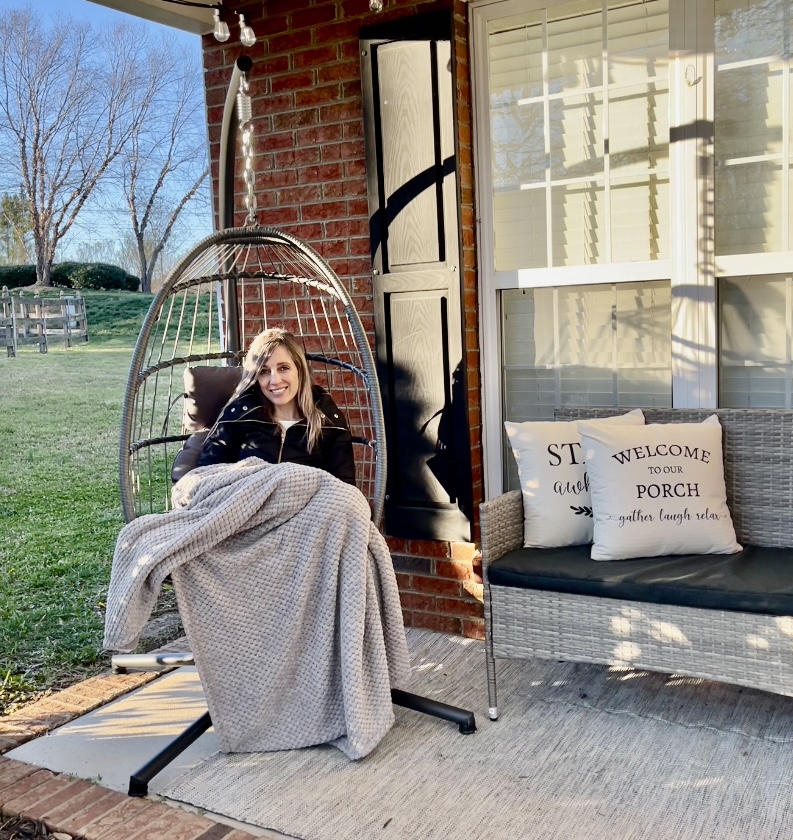
How to Live in Accepted Tenderness

I sat at the back of a large church in a Texan city, remembering a few Sundays ago in a much smaller church when I sat sandwiched between my two sisters and their husbands.

That Sunday both sisters got up with their babies and there I was, the divorced sister, suddenly alone with a space between me and both their husbands on either side of me. I remember thinking how visible that made my position in life, before God reminded me that I was beloved, HIS BELOVED.

The enemy flashed another word into my head before I listened to God speak over me. I could have listened to the lie instead, but I knew it wasn’t true. Anything but beloved, it collided with my identity as God’s beloved.

I had decided to bring humor into the situation by texting my other sister during the service (yes, I’m like that sometimes), telling her what I felt like. The text never sent. Weeks later, I scrolled through my texts to her and saw it sitting there, “undelivered”. The identity lie never got sent because it was never true.

I knew the truth that Sunday. God was good and I was His beloved.

This Sunday in Texas was no different. I was somehow fine sitting alone in a large church where I knew no one, because I’d already seen God see me in a large airport in Dallas.

Get that—you can see God see YOU.

“I like your dress,” I’d smiled at a lady in the Dallas airport restroom. Then, I chatted with a pilot during a long slow line to board. The officer world I’m familiar with is similar to the pilot world, so we chatted easily about family schedules and making it all happen in spite of its challenges. I ask about his wife and kids because it is my honor to reflect on a man’s family as he’s out in the business world.

I was once the wife of a man who needed a woman out there to mention his family at home. I do this frequently for wives, —even though I do not know them. In my heart, I know them.

Inching forward on the plane toward my seat, I noticed the same lady in the pretty white dress sitting next to my assigned seat. We smiled briefly, then both buried our faces in books while ignoring each other for the silent space of written words. But as the plane landed in Amarillo, I smiled again and said hello.

She lived over an hour away but had friends in the city my daughter and her family lived in. We exchanged numbers, and she reached out twice later in the week before I got back to her to thank her. The church she let me know about, the friend she connected me with, and the love she shared was definitely God seeing me, seeing us.

I planned to meet her friend Sunday morning, and in a large parking lot, I recognized her and her husband’s faces pulling up close by. We were both running late so I avoided meeting her before service, but as I sat toward the back, I noticed they sat close by. God highlighting them and making it impossible to miss each other in a very large space with hundreds of people.

God sees me, I realized again.

Worship melted me. It was good to be pulled into Something greater than myself.

Then, the preacher began with no ordinary sermon, but a deep and vulnerable teaching from the scriptures with his own experiences tied in. Raw, human, and devastatingly real—in some ways entirely adjacent to my own stories—I sat there seeing that I was seen by God as His Beloved as he gifted me a sermon I could relate to in a personal way.

Of course I met the friend of the lady in the Dallas restroom, and now hopefully we’re meeting this week at my daughter’s house.

God is extravagantly showing me His eye, I realized.

Hear me on this—the most extravagant love shows of God to you are sometimes small and could be invisible if you ignore them. But if you see them, you can’t unsee them.

And once you see the goodness of God and your space with Him, you can’t unsee your identity either.

Hear me on this also—satan’s clamoring voice is loud and often believable. But it wreaks havoc in your soul and wrecks your identity. It looks real and sounds real, but an imposter will never be the real you.

As John Eagan says, “Define yourself radically as one beloved by God. This is the true self. Every other identity is illusion.”

Whether I’m in the Queen city of Charlotte, at home and familiar, or whether I’m flying alone to a place I’ve never been, my God sees me. And your God sees you.

The bliss of my grandbaby in Texas was interrupted one morning by sudden and rare postpartum complications for my daughter. I never felt so helpless as I fought for her life and watched her wheeled out on a stretcher to an ambulance.

When she was okay, I wanted to say “God is so good”, but I caught myself.

God is good all the time, no matter what. He’d be good if my daughter wasn’t alive that day, her body full of fentanyl and pills to accomplish the fastest thing possible—let her live. What if she died? Would God still be good? I knew the answer was yes.

I remember worshipping God as my brother’s body lowered into the ground. I also remember my body basically shutting down in shock and grief that he was gone. I remember the stench of a Honduran cemetery with above ground vaults, and arriving in South America just in time to bury him.

I remember staring at my mother’s face and wondering at the almost other-worldly peace I saw there. I also watched her struggle and cry.

We took a boat out on the waters that claimed him, staring in the face one of the worst imaginable scenes of someone we loved.

We often forget that peace and pain are not in opposition to each other. That peace passes understanding and steadies us in the face of pain.

All because God is magnificent and rules over a fallen earth. He promises to bring His children through this life with peace, holding us in the kind of grace that wins.

The gift of this kind of grace, even angels long to look into (1 Peter 1:12). Do we get this—the presence of a holy, winning God in our own hearts, abiding there?

In those harrowing moments with my own daughter, God saw us and let us know His eye was watching. Her ambulance driver went to the same church the Dallas airport lady told me about, and invited Beka to come. “My mom already visited, and I’m going to,” Beka told him.

Amarillo is a large place with a lot of churches. Do you see how small things can tie together to let us know the eye of God is on us?

You don’t have to (and you cannot) fix people or circumstances. But you can tune in, you can focus your eye, and when you’re too tired to do either one, you can pray—and this is the good thing about God—when you’re too tired to pray you can rest and remember that the Spirit prays for you.

“Likewise the Spirit helps us in our weakness. For we do not know what to pray for as we aught, but the Spirit Himself intercedes for us with groanings too deep for words.”

Romans 8:26, ESV

I’m learning, as Brennan Manning says, to “Live in the wisdom of accepted tenderness.”

Seeing the accepted tender position you have with God changes everything.

Love always,

Sara D.
Live as if You Were Dying

Watching four children walk up stage to express love for their father, in tears, broke me a little today. Two of the girls were engaged and had lost their dad just before their weddings. Everyone was in tears, and what they loved most about the man who passed away was his love for gathering with others and creating spaces where people enjoyed each other’s company.

I knew it was true because I’d experienced it from him, too. He was always interested in meaningful conversation and as his daughter said, “He made me feel like I was the smartest woman in the room.”

What a beautiful thing for a daughter to be able to say.

But what can we all do to create the same sense of love and belonging as he did?

I love birthday parties where we all gather in a circle and take turns sharing what we love about the birthday person.

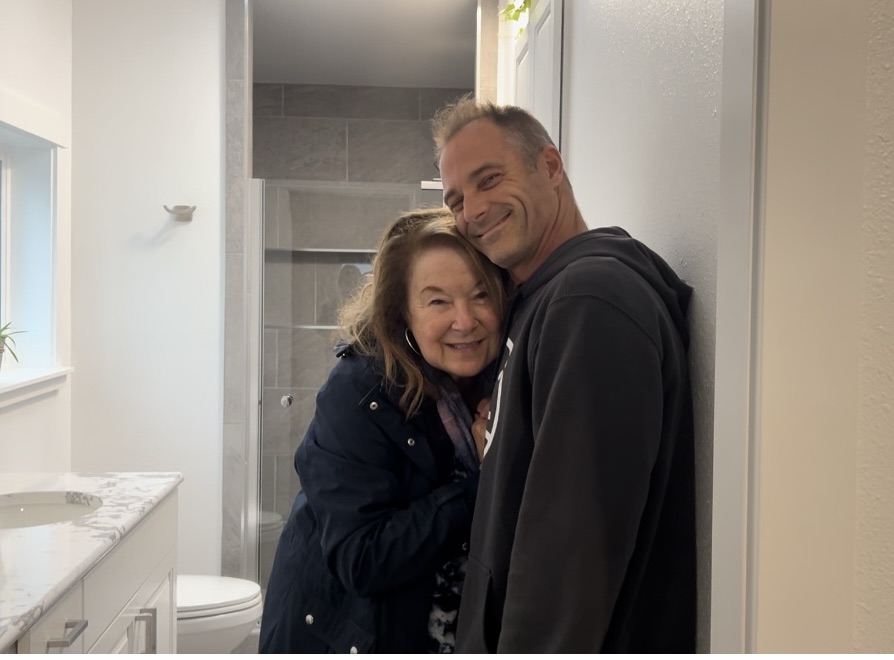
Sometimes, a birthday gift is a remodeled bathroom, like this son did for his mother.

Usually, he or she is squirming—and I wonder why we are all so uncomfortable with encouragement, as if perfection was needed before we accept that we truly are a blessing in so many ways.

We usually hear most of the good about someone at their memorial service when they are no longer there to hear it. There’s not a person on earth who doesn’t need to know they are needed, loved, and valued while they’re living.

It hit me, this thing of living as if we were dying. Someday, I’ll be in the grave. I have four children, too.

I bought a house yesterday, then called my oldest daughter last night to check in on her. A mother’s nest is never empty, even after her babies have flown. “What are you doing this weekend, and do you want to join the other kids and I to have dinner at the new house, and just hang out there together?”

She jumped on it. And I remembered a week prior that she’d asked me to please invite her to do things with us. I’d been a little surprised because I thought she knew how much she was loved and wanted in this family—by her mother, especially.

I agreed quickly. She was twenty years old, and I wanted my ceiling to be her floor. If she never had another woman wanting her to pass her up and go far beyond, she’d have that from her mother. And I always wanted her around. But, she needed to hear it.

The man who passed away had been able to travel and do expensive things, but I’m a single mom. Often, as I’m working, I open Instagram to see my friends flying to other places of the world with their husbands, relaxing by turquoise colored waters with a margarita in hand. Sometimes they’re surrounded by happy children—and I think of my own, and how I want to give them all the above, too.

I may not be flying to the Bahamas, but I can order pizza and gather my kids into the new kitchen that’s actually 118 years old. I won’t hear my daughter express excitement over flying to Europe, but I’ll hear her say, “I can bring my own children to this house someday” and I realize that creating home for children even after they’re adults is far more meaningful than being able to fly to another country for a week or two.

We’ll always look back and laugh over the days we drove six hours in one day to have about the same amount of time at Wilmington Beach. How we’d pack sandwiches so we wouldn’t have to buy coastal food, and how we’d head three hours home when we wanted to head to the closest hotel room over looking white sand and crashing blue waves.

We won’t be sinking into soft white pillows to the sound of waves; we’ll be driving through the sunset with sand between our toes and the younger kids falling asleep brown from the sun and stomachs full of ice cream because we decided to spend at least a little bit of money that day.

What will matter is that we gathered, we laughed, we expressed appreciation for each other. And here’s the thing, mamas out there—your sixteen year old may gripe about the food in your pantry but when she’s twenty, she’ll re-word her complaints into “I can’t believe I used to gripe about your food, mom. You bought food for four children and I’m just feeding myself.”

Parents, don’t compare yourselves to others who can do more. Like Mary did when she poured ointment on Jesus’ feet, let’s do what we can with what we have. When Mary was criticized and told she should have done something different with her oil, Jesus told the critics to leave her alone, and said, “She has done what she could.” (Mark 14:8)

Some of us don’t do what we can do because we’re focused on what we can’t do. I want us to live fully and take what we have with both hands, hold it, ponder it, and then give it out—first of all to our families, then to those around us.

Let’s live as if we’re dying—because one day, our tongues will be silent and our hands will be still.

I want us to gather as if tomorrow was the last day we were able to see others.

I want us to steer conversations into words of life that give grace to those who hear them.

I want us to live FORWARD because we know the Father of mercies, the God of comfort, and the Spirit of healing and hope.

Let’s not wait for a memorial service to express appreciation for each other; let’s live as if we are going to die.

Because we often say, “I’d be willing to die for you.” Can we say with equal confidence “I’m going to live for you”?

Because only in living well can we die well. And only in dying to ourselves, can we truly live.

“Except a grain of wheat falls into the earth and dies, it remains alone; but if it dies, it bears much fruit.” John 12:24, ESV

Why Spouses Should be Treated Better than Strangers

It’s weird how we can sit in cafes or walk streets, expecting everyone to be kind, even though most are complete strangers to each other.

We all just kinda know how humans are supposed to treat each other.

Most of us wouldn’t be too impressed with someone yelling at a customer or someone receiving a favor without saying thank you or showing appreciation of some sort.

We’d probably wrinkle up our noses and be happy we can walk on. Some people are just yuck and make us glad we don’t have to be around them.

And if someone continuously criticized a friend, that friend would probably either confront the problem, or quit hanging out as much.

Negative actions usually cause negative responses.

But, this simple principal seems to be forgotten by many spouses. So I’m writing from my heart here, and just asking this:

1. Do you ignore your spouse—yet get hurt when you’re not pursued?

2. Do you avoid conflict—yet remain bothered that your spouse doesn’t know how you really feel about something?

3. Do you continually give negative or correctional responses when your spouse shares an idea or simply vents his/her feelings—yet get hurt when they close off and don’t want to talk?

4. Do you avoid helping out—yet carry a grudge when your spouse doesn’t help as much as you want him/ her to help out?

5. Do you ignore them when they speak—yet feel hurt when they don’t look at you when they speak, but choose to focus on another person in the room?

6. Do you make your dislike of them known—yet become hurt when they don’t pursue you in the bedroom?

7. Do you treat them as little more than a room mate—yet complain when they don’t date you well on special events?

I’d like to call attention to the fact that people often treat strangers better than their own spouses. Strangers who may be a million times worse than your spouse, strangers with whom you have no connection—hear this carefully—are getting better treatment from some of you than your spouses are getting.

That very stranger would keep distance if you treated him/her as you treat your spouse. Withdrawing to avoid more pain is a natural response of the human heart.

There’s a story of a man who greatly disliked his wife and went to get counsel. His therapist told him that he could divorce her after three months IF he tried the following recommendation first.

He was to go home and treat her as if he genuinely LIKED her.

We can picture what this meant. Smiles, kind words, acts of service, hanging out, and all the things we do with our best friends.

His therapist waited in vain for the man call, then finally called him. He was ecstatic. “I treated her as if I liked her, and everything changed”

You better believe there was no divorce for that couple! Simple, basic human kindness and dignity re-ignited their love when it would have otherwise been snuffed right out and the courts would have seen one more broken couple filing divorce papers while their children’s eyes take on a whole other look than the care-free, joyful ones they previously had.

So I’m here to say to every unhappy spouse who is married to a faithful, albeit imperfect, person: Just take a big, bold dare to love them, and show it. This can be the bravest thing you do. And sometimes, this dare to actively show love does more than many hours in a counselor’s office.

(To those who’ve tried this and nothing changed, please know that loving is something we do because we’re connected to God more than because we’re connected to our spouse. Sometimes, loving well doesn’t change a drastic need in a spouse. In those cases, we simply do what God asks us to do, then leave the rest. We are not responsible to change another; we are responsible to love well, then trust God with the results.)

Remember this–we love because God loved us first. Loving well is something every person does who sees the value God places on each human being.

Loving well is not optional when we see the great love God gives us personally. Loving well is part of our own dignity, character, and value. In Christ, it is who we are. Someone else’s character cannot rob us of God’s character and grace within us.

Treat your spouse as well or better than you treat your best friends, and watch what happens! If you know what it takes to stay a friend to someone, please know it takes the same kind of thing to create a happy marriage where both of you find the companionship you crave.

For the cause of LOVE,

Sara