Expressing Your Needs Effectively

I’ve often wondered what would happen if women chose to express their needs differently.

What if women didn’t bottle up, shut down, or remain silent when they have a need?

In the same note, what if women didn’t yell, accuse, or nag to get their needs met?

I’ve seen a woman shut down, conditioned to think she is not worthy of someone else’s sacrifice or time, or perhaps she’s married to a man who wants her in a subordinate posture with no voice. Perhaps, every time she tries to express a need it still goes unmet or is met with a selfish response, so she learns to shut down and survive as best as possible.

This is tragic. But tragic also is the woman who riddles her home with criticism and control. In this home, a man may shut down or become angry, avoidant, or bitter. He is never good enough, so why keep trying?

The world seems full of women trying to get their needs met, but untaught on how to do it effectively. Not only in marriage or dating, but in friendships and community, we make these blunders that give us exactly what we don’t want rather than what we’re truly looking for.

We’re told to be honest, so we honestly say things like:

“You’re always so busy and you never spend time with me.”

When in reality we need to say, “I miss you and I’d love to have time with you.”

One way places value on the other.

One way criticizes the other for not being “enough”.

Both ways express a need, but one way lifts the other up. Saying, “I miss you and I’d love to have time with you” translates into “You are lovable enough to miss and awesome enough for me to crave time with.”

Saying, “You’re always so busy and you never spend time with me” translates into “No matter how hard you work, you are not measuring up.”

Mothers, wives, sisters, and friends—I believe our relationships would change if we refuse both sides of the ditch. Yes, we are going to express our needs and no, we are not going to shut down. We are going to use our voices, yes—but we are going to use them well.

I don’t think talking against feminism is truly helpful these days, but teaching women how to use their voice arrests attention because there is hope in the art of gracious communication. No one is asking her to be silent, leave her gifts and talents on the table, or live with unexpressed need.

Effective communication elevates women like Jesus did. Every tear, secret longing, voiced question, or committed sin was met with hope and answers by the lovely face of Christ when He walked this earth.

Mary’s question of where to find the Lord was met with the answer of His presence. She asked, searched, and used her voice to find what she was needing to know, and Jesus answered every need she expressed.

“But Mary stood weeping outside the tomb………….And she saw two angels in white……They said to her, “Woman, why are you weeping?”

She said to them, “They have taken away my Lord, and I do not know where they have laid him.”

Then, Mary turned around and saw a man standing behind her, but had no idea it was Jesus. He asked her why she was weeping. “Woman, why are you weeping? Whom are you seeking?”

Mary begs the man to tell her where Jesus was laid so she could take his body away and care for it. Then, Jesus calls her by name. “Mary.”

Immediately she knew it was the Lord. And just as quickly, Jesus asked her to go tell the disciples what she had seen and heard from Him. (John 20:11-18, ESV)

Mary needed something and went to find it. She didn’t hide away in her home, weeping. She knew she was capable of taking care of Jesus’ body and she was courageous enough to face Roman soldiers to ask for it.

Her courage allowed her to speak and her dignity required her to speak wisely even in her distress. God sent angels to answer her rather than soldiers to despise her. Then He sent Jesus not only to show Himself to her but to call her by name and send her to tell men what she’d seen and heard.

Do we see how Mary Magdalene, out of whom seven demons was cast, was elevated and empowered that day by Christ? None of that would have happened if she had either hidden away in her house in despair (shutting down) or been out screaming at evil men (control and anger) for killing her beloved Jesus.

Mary’s voice was heard that day—and I believe, as women all over the world learn how to utilize their femininity with true empowerment rather than brazen attitudes, we can bring healing and hope to our relationships.

To you married ladies, expressing your needs with honor can change your marriage. But, in the case that it doesn’t, take heart that the same Jesus who heard Mary also hears you and He will meet your needs even if your husband does not. He did it for me, and He will do it for you.

Marriage was Intended to Make us Happy (Not Just Holy)

Christians are not always great at honestly owning human need or desire.

We grow up hearing people teach against anger, discontentment, or lust. The internalized message often becomes “Don’t be angry (over anything), don’t want what you don’t have (force your desires to a back burner), and be satisfied in God (be fully complete without romance).”

Yet, we are people created in the image of God for the glory of God with the intent that we should bring more of God to the world we live in. So, should we not take a careful look at some of our strongest emotions since they are created by Him?

What if, rather than silencing our emotions, we bring Christ into them instead?

Let’s look at one of the most quoted “Christian” phrases we hear:

“Marriage is intended to make you holy more than to make you happy.”

I believe God purposefully created marriage to create one of the happiest situations on this earth. Our lack to experience it is not an excuse to paste God onto an unhappy marriage as if He never intended our happiness.

God could have created the world without color.

He could have made food with no flavor.

And He definitely could have come up with a way to procreate without the closeness of relationship or the enjoyment of sex.

What if Christians walked around saying that God intended food for our nutrition, not our enjoyment? We’d laugh! Of all people, Christians are some of the most hearty advocates of the enjoyment of food, often at the expense of health and vitality.

Should not our enjoyment of marriage go far deeper than our delight in food?

God definitely intended marriage to bring much happiness. He says that only some can bear to be single, those who are eunuchs for the kingdom and those who are born eunuchs. He knew that the joys of marriage would be so greatly missed by most single people, that they would, by default, end up getting married.

“For there are eunuchs who have been so from birth, and there are eunuchs who have been made eunuchs by men, and there are eunuchs who have made themselves eunuchs for the sake of the kingdom of heaven. Let the one who is able to receive this receive it.” (Matthew 19:12, ESV)

Here we see that God purposefully created most people to crave relationship. The physical, emotional, and spiritual parts of us are born to crave, and it would be difficult to argue that when we crave something, there is not a part of us that craves the enjoyment of it.

Even sex was designed for enjoyment as well as procreation. Our bodies were created to need and want sex whether or not we intend to bring more children into this world. And God acknowledges that when Paul tells us it is better to marry than to burn.

“To the unmarried and the widows I say that it is good for them to remain single, as I am. But if they cannot exercise self-control they should marry. For it is better to marry than to burn with passion.” (1 Corinthians 7:8-10, ESV)

Most people crave companionship. What isn’t more fun when done with someone you love?

My question to the church is this: do we shy away from promoting happiness in marriage because we are so far from experiencing it?

Why should listeners sit in our pews hearing about the hardships of marriage and how our holiness was intended rather than our happiness? Should they not hear, repeatedly, of the joys of a happy marriage and how to maintain it? Should they not hear couples talk of life with their best friend, and how beautiful it is?

And when that is not the case, should we not all be on our knees in repentance for not pursuing the happiness God intended within marriage, and making it so? If God creates this gift for happiness and holiness, why should we merely harp on holiness as if God cares nothing for our happiness?

I think sometimes Christians find more enjoyment in food than they do in marriage. In fact, food destroys marriages as spouses binge-eat their way to comfort while avoiding the discomfort of a lacking marriage.

One earnest friend put it this way to me recently: “There are many kinds of abuse within marriages. Over-eating to obesity is one of them. It is unfair to a spouse.”

I was struck with the earnestness of a statement made so passionately on a topic most dare not mention. And I have to put out the question: If some things make a marriage difficult, do not other things make it supremely happy?

If some things make food gross, we add spices for flavor, sugar for sweetener. We study, learn, and taste test to see what works and what doesn’t work to create delicious food. We talk about pan frying or air frying or deep frying, knowing that whatever method we use will produce different results.

Never do we stand in a cooking class and say, “Food was created for nutrition, not for enjoyment.” (Though I do believe nutrition is of greater importance.)

Friends, let’s give a younger marriage-shy generation more hope than to pretend we expect less enjoyment from a monogamous Christian marriage than we do from other things. Let’s start giving our spouses the same effort and see what happens.

A happy marriage won’t happen if churches keep preaching leadership and submission while neglecting friendship, mutual respect and honor, and how to show each other even more love than we show our best friends.

As with everything Christ teaches, most “authority” problems in the home solve themselves when both husband and wife are emotionally intelligent enough to know how to treat each other as good or better than they treat their friends.

We don’t ignore our best friends, then expect them to shower us with love.

We don’t yell at them, then expect them to want to be around us.

We don’t refuse to talk, then expect them to want to talk with us on our birthday.

We don’t even use “that tone” in our voices when we speak to our friends. We wouldn’t dare! What’s more, we wouldn’t want to.

Tell me then, how another sermon on leadership and submission will fix the root cause of cruel treatment within marriages. I’m here to say, from experience, it often won’t.

Healthy leadership in marriage is a heart matter. When a man’s heart is humble, unselfish, intelligent, and giving, most wives will say without doubt that he is the best. She will admire him without trying. She will want to make his life great. She will want to meet his needs as he meets hers.

And when a woman’s heart is kind, she won’t want to yell at her husband. In fact, her dignity will not allow it. She will understand that every unit needs a leader, and will defer to her husband on larger matters of disagreement when a decision must be made. Her honesty will lead her to give input while her humility will allow her to defer willingly, when necessary.

This is a picture of Christ and the church. It is so much better than “men should lead and wives should submit”. Jesus always comes to the heart of the matter and offers the gift from abundant life within the heart.

So much of a happy marriage is simply emotional intelligence. Some things we just don’t do; some things we just don’t say. Other things we do, on purpose, often. We study, learn, and behave in ways that make our partners feel safe and happy.

For those of us who have or had unhappy marriages we couldn’t fix though we tried our best, let’s take heart that holiness is indeed more important than happiness. We know that our personal choices for good do not always create good in another.

But we honor God and find even deeper love from Christ in these places. And we will always know the happiness God intended us to have, while we wish that the church, rather than stick a Jesus label onto unhappy marriages, would do internal surgery to find the cause and cure of it all.

For the Christ Who created Love,

Sara
Is There Absolute Truth?

Can you imagine suggesting that a woman is not a woman, but only worthy of the title “person”?

Parents in Vermont are in an uproar as schools change lingo in their sex education. A woman is to be called “a person who bears seed” and a man is to be called “a person who carries sperm”.

In the name of supposed equality, linguistic theft has never been so real.

A modern world can start fudging truth but a post modern world has a difficult time acknowledging that there is absolute truth. And yet, any logical, well-reasoning person will see that those who want others to believe that truth is relative, are in fact carrying their own version of absolute truth.

“There is no absolute truth” is of necessity an absolute statement of “truth”.

Those who cry tolerance most of all are often the most intolerant of all who still choose to place faith in something greater than feeling or emotion—the God of this universe Who created all things, is the Founder of love, and Who will never call evil good because that is contrary to His nature.

Hope Farm, with Moments of Hope Church

How could we not look to Someone bigger than ourselves? Human emotions are scary and can go absolutely wacko.

It was emotion who took my ex to a fifteen year old girl.

It was emotion who took a shooter to Nashville, leaving devastated families grieving thier children.

Every affair begins with emotion. Someone feels discouragement in a marriage, feels attracted to someone else, and bam—one more divorce hits our post modern world where humanism is on the rise, even in the church.

Society begins to disintegrate when we live as if fickle feelings are greater than factual truths.

It should be no surprise that emotional women are now initiating 70% of divorces. Satan lies again as he did in the garden when he showed Eve delicious fruit and asked her if God really said no about something that good.

Just as Satan’s reasoning didn’t change God’s word to Eve, so human reasoning will never, ever dismantle the spoken Word of God.

I love that I can run to the Word of God when my feelings are going nuts.

I love that I have something solid to tell my children, “This feels wrong because God says it’s wrong.”

I love that I can rest my heart on the promises of God when the world is full of people who would rather indulge in passion.

Those who can’t place their feet firmly on the Word of God will very soon begin calling evil, good. Gen Z has a difficult time realizing that the homosexual relationships they see aren’t sweet, they are sinful.

“Woe to those who call evil good, and good evil, who put darkness for light and light for darkness, who put bitter for sweet and sweet for bitter.” (Isaiah 5:20, ESV)

Never in all history did God intend children to have two mothers or two fathers. Never was man intended to have sex with man, or woman with woman. Man was created to be with woman, and nothing our society says will ever change the goodness of creation in God’s design.

Those who speak against it are not always “homophobic”; sometimes, they are the most loving people around.

The very nature of love cannot tolerate all things. If it could, there would be no right or wrong, no need to incriminate anyone for anything. Murder and rape would be okay. Because once you say there is no absolute truth, you have no basis for saying anything is wrong. Who are you to decide what is right and wrong if you cannot acknowledge a God who does the same?

The very nature of God requires there to be right and wrong, light and darkness, good and evil. A good God cannot call evil things good, or pretend it doesn’t matter. He cares about Nashville. He cares about victims of abuse. He cares about a spouse abandoned or cheated on.

God will never pretend He doesn’t care. He will always hold a standard of love that reaches to the broken and makes them whole again. So again I ask, who are we to decide what God can call good and what He can call evil? Dare we try to receive His love without also accepting His word?

There’s a dignity, a love, a grace given to those who love others too much to watch them destroy themselves.

I say LOVE OTHERS for a reason. So-called Christians, please stop with the mockery and laughter. No drag queen will ever be drawn to your ridicule, but they may be drawn to your righteousness and love.

Society begins to disintegrate when family structure dismantles itself for unbridled lust. Lust gone wild will never replace love grown in commitment.

“In those days there was no king in Israel. Everyone did what was right in his own eyes.” (Judges 21:25, ESV)

“When the Spirit of Truth comes, He will guide you into all truth, for He will not speak on His own authority, but whatever He hears He will speak, and He will declare to you the things that are to come.” (John 16:13, ESV)

“Stand firm then, with the belt of truth buckled around your waist, with the breast plate of righteousness in place.” (Ephesians 6:14, ESV)

Why I’m not a Feminist

Recently, I watched a survey on men expressing what they loved most in women. The answers caught my attention.

They didn’t say they loved when women tried to be equal, or prove they could do everything a man can do. They didn’t express love for manly behavior or strength. They didn’t say they loved a woman who could bring in good income for the family or square her shoulders to prove herself equal.

From one random man to the next, their eyes lit up with tenderness when the question came from a random stranger holding a microphone on a beach. And without exception, with happy smiles on their faces, this is what they said:

“I like that women are soft and nurturing.”

“I like that they have good intuition and can see things I need to change that I can’t see about myself.”

“I like that women are beautiful.”

“Women are amazing. They’re like Goddesses.”

It didn’t take just watching the survey to get me thinking once again on the importance of femininity in today’s world.

Watching the gleam in my 12 year old boy’s eyes as his picked me up and threw me over the couch made me laugh, then think deeper.

Why did he feel so great when I told him how strong he was, how I couldn’t believe he could do that, and how tall he was growing? And in no time I was listening as he said, “Mom, when I’m fourteen I’ll need to get some cologne.”

“Why?” I asked, wondering what conversations would happen next in my kitchen. “You already have deodorant.”

“Well, my body odor will get worse and worse by then,” he said proudly. “I’ll need both cologne and deodorant.”

Good grief. How can a boy be proud of smelling badly? But he is—and when I fuss over his smell he laughs and tries to smell worse. The bathroom smells badly after he uses it, and he’s more than proud. The same scenario would make my girls run the fan and close the door, hoping no one notices.

At this point all a mother can do is smile, promise a trip to the store for cologne at fourteen years old, and keep cooking food for that lanky frame shooting upwards at a frightening speed.

It only takes being a mother or an honest evaluator of humanity to realize that men and women are different—very different.

My daughters are strong little women but they definitely don’t get a kick out of smelling badly like my boys do.

My daughters are capable, yet want a brother or father to show care and support.

My daughters are intelligent and able to go out into the world for work and school, and yet, what makes my son beam with pride would make them cringe in distress.

My past culture showed obvious oppression of women, and still, I cannot and will not embrace modern day feminism.

Here’s why:

1. Men and women need each other’s strengths.

I’m quite certain that even most of the world’s most liberal women wish for a man to lift or carry something every once in awhile. In general, God created men strong and women less strong.

A man’s desire for strength and a woman’s desire for care shows itself in obscure ways at times. Over and over I hear a woman happily telling of her husband’s daily morning ritual of waking her up with coffee in bed. Her joy has far more to do with feeling cared for than it does with getting to drink coffee in bed. Her husband knows the tricks to his trade, makes it his morning habit—and they both thrive as a result.

A woman knows the tricks to her trade when she nurtures her baby at night, decorates the house, and feeds her family. If she works outside the home, there are still differences by nature and nurture.

A man’s strength has far more to do with character than with body size. I’ve seen some of the greatest men have less-large frames. Less body and more heart is far more masculine than more body and less heart. So watch your choices carefully, teen girls who look for strength in Hollywood fashion.

2. Men and women both need beauty.

A man is designed to crave beauty, not by being beautiful but by observing and appreciating beauty. When femininity is no longer beautiful, but becomes brash, there is little for a real man to be attracted to.

Girls love feeling pretty. And who do they love feeling beautiful for, more than a man they love and care about? The answer is obvious in creation itself—girls spend time in front of the mirror and men spend time admiring the beauty they see. Both are happy because both are living out what God put in.

We are designed by the divine.

Beauty means taking care of our bodies, yes. But even more, it means cultivating our souls. Men need women who are victorious rather than victims.

They need women who are disciplined more than disastrous.

And they need women who are not afraid of their femininity but who understand their greatest power lies in it.

Remove feminine beauty from this world and you’ll have increasing problems with gay and lesbian lifestyles. Women need to keep giving real men something to appreciate.

3. Men want to protect and women need protection.

Feminists may bristle at this line, but before any estrogen laden responses are given (even a feminist’s fighting manner suggests she’s utterly woman) I want to ask one question:

If war were to break out, most on the front lines would be men, not women. Here again, our society has given equal opportunity yet gender differences are clearly obvious in that, even though women are given equal opportunity to engage in warfare, the outcome is different.

There are still far more men in the military than women, even though there is equal opportunity.

Would we see modern day feminists pick up the sword on a first day of front-line grueling battle, proving with their death that they are “equal” to men?

I dare say we’d see men still willingly give their lives for women and children even though our society emasculates them on every turn. While it would be hard for women to enter battle, it would be difficult for good men not to protect their loved ones.

I know there are exceptions to the rule, such as Joan of Arc or other soldier women. But even with Joan, the most exemplary things I read about her are her encouragement to soldiers rather than her fighting.

Divine design created men to protect because women need protection. This means a man is called to protect a woman’s heart as well as her body. This is why cheating on a woman is so cowardly of a man. Rather than protect her, he wounds her.

Men would do well to understand that protection and leadership is not just physical. Most importantly, it is emotional and spiritual. Girls, when you choose a man, choose one who knows how to protect your heart by guarding it from devastation. Never choose a boy in a man’s body; choose a man’s man who is also leader in righteousness.

4. Woman was created from man’s rib.

“Then the Lord said, ‘It is not good that the man should be alone; I will make him a helper fit for him.

Now out of the ground the Lord had formed every beast of the field and every bird of the heavens and brought them to the man to see what he would call them. And whatever the man called every living creature, that was its name.

The man gave names to all livestock and to the birds of the heavens and to every beast of the field. But for Adam there was not a helper fit for him.

So the Lord caused a deep sleep to fall upon the man, and while he slept took one of his ribs and closed up its place with flesh.

And the rib the Lord God had taken from the man he made into a woman and brought her to the man.

Then the man said, ‘This at last is bone of my bones and flesh of my flesh; she shall be called woman, because she was taken out of man.’

Therefor a man shall leave his father and his mother and hold fast to his wife.

And the man and his wife were both naked and were not ashamed.” (Genesis 2: 18-24, ESV)

God chose dust to create Adam while He chose a rib, close to man’s heart, to create woman. Why would we think to prove ourselves when God shows us in the very act of creation how valuable and loved we are?

Feminine women always remember that they have equal value, yet different roles.

Feminine women have no need to compete with men because they are deeply aware that they complement men.

In short, I am against modern day feminism because it devalues womanhood when its goal is to elevate it. When we understand that we are to complement men, we no longer compete with men. When we start competing with men, we step outside of our element and become brash, controlling, and miserable. Again, we are not designed to prove ourselves, but to be ourselves.

The psychological makeup of human beings flows with the Biblical design for our homes. Women loving womanhood means healthy men have something to be attracted and drawn to, something to protect and provide for, and someone to compliment them in all the ways they need it most.

Jeb and Sheena

Here’s to faith-filled femininity!

Finding Life After Divorce (or any other crisis)

It’s odd how some of the most tear-filled experiences of life also bring the most joy-filled freedom of the soul.

“Weeping may endure for a night, but joy comes in the morning.” (Psalm 30:5)

What is our reaction to a particularly difficult day?

Rather than think, “Why can’t I be stronger?”, just let yourself have a bad day. Stay in your bed for a morning and let yourself cry it out. This seems counter-intuitive, but by entering your grief you’ll be able to let go of it in time.

The secret is to not stay there alone. There’s a big difference in wallowing by ourselves, or entering with Jesus.

Rather than trying so hard to come out of our grief, we need to focus on bringing Jesus into our grief. Only in this way can we truly move forward.

Another clique quote I dislike is that “Time heals”. The truth is, many people get worse as time goes along. Many never overcome grief and the bitterness over what was lost. Only those who bring Christ into their grief can see a blessing in it, walk out of it, and overcome it with time.

Jesus entered grief. Yes, He asked God for a way out, He sweated stress-drops of blood, and He wanted a different way. God said “No” to His own Son so that our redemption could be purchased.

See this–begging God to change your circumstance is being like Jesus. He begged God, too. But when He knew there was no way out, He radically accepted the cross.

“For it was fitting that He, for whom all things exist and by whom all things exist, in bringing many sons to glory, should make the Founder of their salvation perfect through suffering.”

(Hebrews 2:10, ESV)

I had to radically accept my divorce before I could navigate my way out of it and build a new life with courage.

Humans were born for love, but sin brought otherwise into the world. And because of this, we are no longer perfect in a blissful, suffering-free world. How we wish Eve had never taken the apple—and yet, we do the same, saying yes to the old serpent when he causes us to doubt the goodness of God.

Satan asks us to consider that God might not really mean what He says, or that God is depriving us. And yet, the truth is, when God says no, He is inviting us rather than depriving us.

God knows what we don’t always know–that our earth-saturated souls do not always feel the need to be satiated with God. But when earthly happiness disappears, our hearts become sponges for heaven-sent joy.

You will see the difference when your soul shifts from dependence on faulty, earthly people to utter dependence on a perfect, heavenly God.

When God says no, He’s actually saying yes to something better. Even if your circumstances don’t change, I can assure you He will do even better things in your soul.

Jesus wasn’t afraid to enter suffering when Mary and Martha told him Lazarus had died. He came, He wept—then, He prayed. See this—He willingly experienced human grief by choosing to enter it even as He knew God would overcome it.

First, He stood and wept. Then, He asked God for life. This is what we need to do—fully enter our grief so we can fully open the door to grace.

Loneliness is one of the emotions God wants to enter. Rather than shut down or medicate, we fully acknowledge to the Lord that we’re lonely, then invite Him into that space with us. Then, let Him lead us to people, places, and things to do.

When we invite Him into our negative emotions, we grow better. When we deny or suppress them, we grow stagnant or depressed.

No one wants to feel dead when they’re breathing. When we suppress our grief, we also suppress our growth.

Jesus wants to come INTO our grief so He can bring us OUT. As He wept over Lazarus, He prayed over death, then overcame death. Lazarus walked out of death because Jesus looked to LIFE in the face of death.

Discomfort and sorrow is one of the tools God uses to bring us to His comfort and joy. Like an oxymoron, sorrow seems diametrically opposed to joy—and yet, when we bring Jesus into our suffering, we bring victory in spite of the suffering.

The process of this becomes an open door for greater freedom than those who had never suffered at all.

Consider with me the power that comes from overcoming something that would have destroyed you. Are you not better, stronger, more able and equipped than if you had never needed to overcome?

We crave ease, and yet, no soldier is born through ease.

We crave good treatment from others, and yet, we learn forgiveness.

Rather than run from suffering by entering emotional or mental denial, we need to enter our suffering with radical acceptance of what is, so that Jesus can move us forward into what will be.

Jesus entered death so He could destroy death. If He had run from death, He never would have conquered it. Not only did He destroy death, He destroyed Him who had the power of death, then put on a stunning display of LIFE in a tomb for death as He sat up in his grave and walked straight out.

I’m smiling as I picture darkness cringe in the face of such Light! And sisters—how Jesus struggled to accept the burden of sin and pain He’d have to carry in order to show the world what RISEN looks like?!

Jesus had to enter the tomb so He could rise from the tomb.

“Since therefor the children share in flesh and blood, He Himself likewise partook of the same things, that through death He might destroy the one who had the power of death, that is, the devil, and deliver all those who through fear of death were subject to lifelong slavery.” (Hebrews 2:14a & 15, ESV)

Sister, don’t be afraid of your suffering. Enter it with Jesus and you will walk out of it with Jesus. Whether your circumstances change or not, your soul will walk right out of the effects of those circumstances.

As Jesus walked out of the tomb in a magnificent display of LIFE, so you will walk out of your grief representing this Jesus Who brings life, healing, wholeness in the face of death.

You may not be able to escape your circumstances, but you can definitely escape the damage Satan tried to inflict on your soul. And because your soul is eternal, and the greatest gift in life is autonomy with God, the suffering you used to run from can now be entered with peace.

The suffering you no longer fear can now be used to spit into hell just a little (or a whole lot), as you walk with the God of all grace.

Sending love and virtual hugs,

Sara

Why You Can’t be Everything

Ever had a jogger pass you by with a huge smile on his face, singing as he ran? I did, the other week.

I couldn’t help but stare. He looked right at me with the most radiant smile as he ran by, singing “You’re amazing, just the way you are.”

I was having one of those weeks where I wanted to be three people rather than one. You know, go to work and be home folding laundry and cooking at the same time? Or be a perfectly rested, available mom rather than one who wants to sink into the couch with chocolate and movie after work?

Resounding in my ear was this, “You should do better.”

But I was smiling as I walked that day, happy to see spring splash the earth with color. Then, the words of this song from a random runner, “You’re amazing, amazing, amazing, just the way you are.”

I wondered if he was an angel. It had happened to me before, this thing of random heaven sent words from a stranger when I needed them most. Of this I’m convinced—God saw me and wanted me to hear His heart toward me.

The runner didn’t know what he gave me, but it was joyfully given.

Recently I’ve been soul searching this thing of giving. Why do I give to a fault, give til I drop, give til I have no reserves, give in ways that deplete my resources and make me bare to the bone?

Why do I have trouble speaking up for what I need, afraid I’ll be too much, that I’ll be a liability rather than a gift?

Life has a way of teaching you lessons if you don’t learn them sooner rather than later. Here I am at 42 years, finally learning how to speak up for what I need (or even want), and how to say no.

Trust me, it’s been scary. But something snapped inside of me when I realized that over extending myself wasn’t blessing my relationships at all—it was destroying them.

Any healthy relationship must have two parties with a voice. If either one goes silent, there is no real communion of the soul, no true relationship, no way to become better and better, together.

Shutting up is actually shutting down, but opening up about your needs is allowing your friend or partner to fully see you—and that is a gift. For awhile, you may not feel like the gift you truly are, but the more you practice honesty, the easier it will become. You are as worthy of being given to as anyone else.

My best friend called me the other day and the first thing out of her mouth was, “Are you in the bathtub AGAIN?”

We both laughed uproariously. She, because for some reason having me in the bathtub a few of the last times she called strikes her funny. Me, because it does seem ridiculous and a little needy.

Trust me, I don’t live in the bathtub. But, my life requires long hot soaks to relax and ponder, pray and rest—and apparently, talk to my bestie.

I don’t mind her seeing my needs. She’s seen them all for the past twenty years. Literally, she’s seen them ALL. And it hasn’t always been pretty or what she needed or wanted, but honesty is what pulls us close year after year.

I broke free this week, as if the last part of my tongue was loosed. I can now speak up for my needs rather than shut down in need. The lesson has been exhausting but the fruit will be rewarding, even if it’s just a free heart.

Like Mary, I want it to be said of me, “She has done what she could.”

Mary wasn’t asked to do all good things; she was prompted to do what she could. The oil she poured on Jesus’ feet was meaningful because it was given from her heart rather than her performance.

Jesus is looking for women who give to their families and their world, beautifully sacrificial while being just as beautifully human.

No human can give everywhere. Soldiers do not entangle themselves in civilian affairs; it would take away from their mission. They know what they are called to, and they stay focused on what’s before them.

Jesus encouraged Mary when she gave to Him as the disciples condemned her for not giving to the poor.

If Mary had tried to give to both Jesus and the poor that day, she would not have done her one thing well. Jesus praised her for doing one thing well and today we still read of her simple act of pouring oil on the feet of Jesus as the disciples condemned her for not doing more, more, and more.

Mary couldn’t do both, but she could do one. And you sister, in your world and in your relationships, cannot be everything, but you can be one thing—in tune with Jesus Who is in tune with your soul. He knows you have needs, and He wants you to express them. He invites you to give cheerfully, in tune with His heart instead of the condemning voice in your head.

Jesus invites you to certain areas of giving, but the voice in your head pushes you to depletion as you try to be perfectly everything rather than imperfectly human, but perfected in LOVE.

Rather than trying to be perfectly everything, let’s learn what it means to be beautifully something.

“But Jesus said, ‘Leave her alone-why do you trouble her? She has done a beautiful thing to me. For you always have the poor with you, and whenever you want, you can do good for them. But you will not always have me. She has done what she could.

(Mark 14:6-8, ESV)

Hosting Others in Conversation

We all know the polite but exhausted stare on someone’s face as they try to listen to someone talking non-stop about themselves for hours.

And, we all know the joy of watching two people interact for an hour with both of them coming away refreshed, inspired, and happy.

What makes the difference?

I’m passionate about this topic and would love to share a few things I learned along the way. I haven’t always implemented these points well when I’ve been going through a lot. We all have times where we need to talk (and talk and talk) about our lives, but as a general rule, hosting another’s heart is an art to learn if we want to bless others in conversation.

It doesn’t take crisis for all of us to need others. Daily, how we engage in conversation can either exhaust or uplift those we speak with.

Let’s look at six ways we can host others well in conversation:

1. Ask questions about his/her life.

Asking questions takes you into someone’s life and hopefully, into their heart. It is an invitation for someone to open up, if they wish to. Like a verbal welcome mat, questions invite someone to cross the entrance into your heart, where you show care.

This brings us straight to the next point.

2. Keep up with their narrative by asking more questions or sharing thoughts about their story.

Many people use this time as an opportunity to jump right back to themselves. “She shared, now I get to share” is the most common response when it should be “She shared, now how can I show her that I heard her fully and care about what she shared?”

Rather than respond by immediately sharing your own story, comment on something she spoke about. This invites her/him to open up even more and creates space to be fully heard on multiple fronts.

3. Listen until you can tell the person you’re speaking with is done.

Don’t be afraid of small pauses in the conversation because this will show him/her that you’re listening well by not jumping in too quickly with your own story. You are creating space for her with your pause.

4. After listening well, be authentic about your own experiences, likes, dislikes.

Timing is important, but great conversation goes both ways. I have a great friend who always makes a point to ask me multiple questions about myself when we talk. After hearing me out, she talks about her life as well. I know she does this because she’s also aware of this key factor in conversation where we both give and receive authentically. We can laugh, talk seriously, or simply share about our day. Because of all these factors, we often comment on how much we enjoy talking.

Authenticity is a major key to fulfilling relationships.

5. Pray WITH people.

Many of us find it easy to say “I’ll pray for you” rather than asking “May I pray WITH you?”

I love when people pray with me. It is much more meaningful than being told they will pray for me, having them walk away, and wondering if they’ll remember to pray.

6. Be yourself.

Every time you try to be someone else (or something else), you lose who you are. And, no one can be the authentic version of YOU. People need you, God needs you, and you need you to be fully you.

This doesn’t mean ignoring personal growth or denying flawed areas in your life. Being fully alive means we chase down areas we need to grow in and allow others to speak into our lives.

Being yourself is not the same as the modern, humanistic version of “love yourself”. If I loved myself that way I’d be in denial of any needed growth. Some of us need to repent of ourselves more than we need to love ourselves. In this way we run after growth and become better versions of the authentically real person God created and wanted on this earth.

Being ourselves means we accept our basic personalities, looks, and even history. We accept what we cannot change in order to make room for things we can change. We become fully content in our story so we can create an ever growing story in our lives.

By not fighting who we are, we now become inviting to everything we were born to be, experience, and touch. Radical acceptance sets us free! And in this way we open the door for others to enter our lives.

Cheers to all my sisters who love and listen well!

Four Things Women are Designed to Host

My almost twelve year old son still loves to snuggle up against his mama’s warm winter robe. And sometimes the kids will say, “Mom, can you please gain some weight so you feel cozier?”

I always laugh because “feeling cozy” is a goal of mine for my kids but gaining weight for that goal is not my objective. However, there’s a reason children want mom to be a place of warmth and safety.

I love watching my children’s eyes pop when they realize, for the first time, that mama hosted them inside her womb. That they grew to be a little human inside of me astounds them and I use that opportunity to tell them how they are part of me and share my DNA, that I love them unconditionally, and will always be here.

Children with broken homes need to hear mama say, “I’m not going anywhere. For the rest of my life, I’ll be here.”

Most moms are naturals at loving and hosting their children. We are easily mama bears, and even those of us who don’t like fighting will come to arms over our babies whether they are kids or adults. But, I want to us to consider that our ability to “host” goes far deeper than our children.

Let’s look at four different ways women are called to host:

1. We are called to host the Presence of God.

Women are powerful assets in the kingdom. We are not to shut down and hide behind dishes and diapers, but are called to study the scriptures and bring aspects of the gospel into every part of our world.

We study apologetics so we can teach our children why and what we believe. We do this before they enter college with atheistic professors who will win an argument they’ve never been taught to engage unless we take our calling seriously.

If you feel ill-equipped, find a class or another adult to take your children deeper into the why’s of their faith. For awhile, I taught my children from my couch and for awhile, I took them to an apologetics class taught by a friend. Whatever the case, talk to your children and help them face their own doubts openly.

The Spirit of God wants to permanently reside in your soul to where your default attitude becomes hosting a God atmosphere. (Your children absorb what is caught even more than what is taught—atmosphere is everything!)

The flavor of Christ in our child’s world is hard to ignore. Even a struggling child will often say, “What you taught me doesn’t go away.”

You are a light bearer and a life giver because you host the Giver of all Life.

2. We are designed to host a nurturing environment.

Why do women take joy and pride in their homes? We love making things beautiful!

We are called to turn houses into homes.

Little things that may seem insignificant add up to create a wholesome environment. Imagine with me for a moment—no dinner means the rest of the family comes home hungry, needing to figure it out rather than gather around a loaded counter top or table.

No clean bathrooms means they enter smelly rather than refreshing spaces to groom and shower.

No décor means their world is bland and uninviting.

Stepping into a lovely, clean bathroom can make someone’s daily routine refreshing rather than frustrating.

So take heart, mothers who put in a lot of effort into creating and running an efficient household. Your children will grow up with good memories of home if you embrace everything that doesn’t feel good in your daily moments.

I’m here to say—cleaning a toilet and making a meal has dividends beyond what you see or feel today. You are not just doing menial tasks; you are creating meaningful homes.

Fill your fruit bowl and buy an elevated cake stand pretty enough to load up with muffins and stay on your counter top. Invite your family into your world by creating spaces they enjoy and need.

Home is where the hugs are.

3. Wives are designed to host, even in sex.

Think with me for a minute about the natural design of our bodies. Whose body hosts and receives, invites and welcomes?

There’s a reason sex is a picture of Christ and the church. A man comes into his wife and gifts her his seed, which can create life. We host that life and give birth to a child, placed in us by the man we welcome into our body.

Sex is a beautiful thing designed to bring joy, connection, and satisfaction to both parties. Nurture this area of your life as you live fully in the beauty of your womanhood.

Just as Christ indwelling us brings us greater joy than anything else we know, so a married woman’s joy increases by her husband’s presence in the bedroom. If this is not happening, take time to address it, discover the cause of it, and make healing it priority.

(As shown in one survey), there is not supposed to be a 47% gap in sexual satisfaction for evangelical wives. And the gap will only be bridged if we are brave enough to uncover the cause. God has so much joy for wives in passionate and fulfilling sex. Until we discover and embrace it, we only enjoy part of our womanhood.

It is time for Christian women to be loved and honored in the bedroom and in all areas of life. Be free, be real, and step into all you are and want to be!

4. Host a Welcoming atmosphere.

Yesterday I taught a class of kids in low-income housing, seated at a picnic table and surrounded with beautiful brown faces.

But before I could do that, I had to walk with friends through apartment complexes, inviting kids to come. We showed them our bag of homemade chocolate chip cookies and invited them to join us. And when they came, we let them eat cookies while they heard the story of how God visited Samuel in the night even when his father was absent.

Most, if not all, the children there had absent fathers.

I got to watch my friend Lisa go out of her way to hug kids and even drive them to the grocery store for extra snacks. She carried such warmth about her as she hosted in that open air space where participation was uncertain for awhile. What child could resist her presence?

See this—women are called to bring warmth and belonging everywhere they go, in whatever capacity they are called to. It doesn’t look like doing as much as it looks like BEING.

We can only give what we already are.

When you know how much value you have as a woman, you can give value to everyone else.

You can host because you are fully convinced you have something worth giving because God has placed in you and with you and through you something of value that He calls you to share.

You are no longer desperate to be included or even to be loved because you are so fully convinced that you are already loved by God. Why focus on a human man, woman, child, church, or group when you are already focused on the Son of Man who became human just so He could enter your need?

Our focus on Jesus needs to be all in. Only there, fully at peace, can we give out the Prince of Peace.

With that knowing will come grace and space to give the same thing to others—whether that’s your husband, your children, your friends, the world, a stranger, your online community, or within the walls of your home—all will benefit from your presence.

The world needs women. God needs women. And you need yourself to be fully woman, taking a brave, bold dare to be fully alive.

Sending Love,

Sara

Six Ways to Show Hospitality in a Twenty-first Century Culture

My parents set an extra plate at our long family table so often that it became almost as common as eating by ourselves.

‘Ourselves’ included ten children seated around a massive table with dad and mom at the end. Feeding an extra person or two made no difference because the pans of food were so large that there were always leftovers, anyway.

Only years later did I realize what a gift my parents were to others. Back then, I didn’t understand why large pots of homemade soup was considered kings food. We were plain and simple—but we had what all humans long for–family, belonging, and a space for one more (or five more).

In later years as a married woman with a large house, I loved hosting. Cleaning, decorating, and cooking delicious food for large crowds was my favorite thing to do—and as a single mom, I’m still passionate about hospitality. But, I’ve had to find creative ways to love others because my schedule is crowded and time/energy is less.

Life looks different at different times, but love always looks the same.

I’d love to inspire all of us toward a hosting life-style with these six do-able options.

1. Every morning, ask God to bring people across your path.

The most ordinary days can be charged with extra-ordinary influence when you’re not only willing to be used by God—you’re begging God to send you. Keep your eyes and heart peeled.

Ask God for creative ideas. Some carry a “God pocket” of cash in their wallets and see grateful tears as someone’s prayer was answered by their God-appointed gift. The Spirit of God wants to lead, speak, and walk us toward people everywhere. Stay tuned to your waitress, cashier, or co-worker. What does God want to do for someone, today, through you, that would not be done otherwise, without you?

My friend Elizabeth’s porch, where all are welcome.

2. Use your phone.

I know we all talk about phone addictions, but what about phone community? Next time someone pops into your mind over and over, stop your day for a few minutes to send a text. If time allows, make a call. Do you know how many people in this world need to know someone’s checking in?

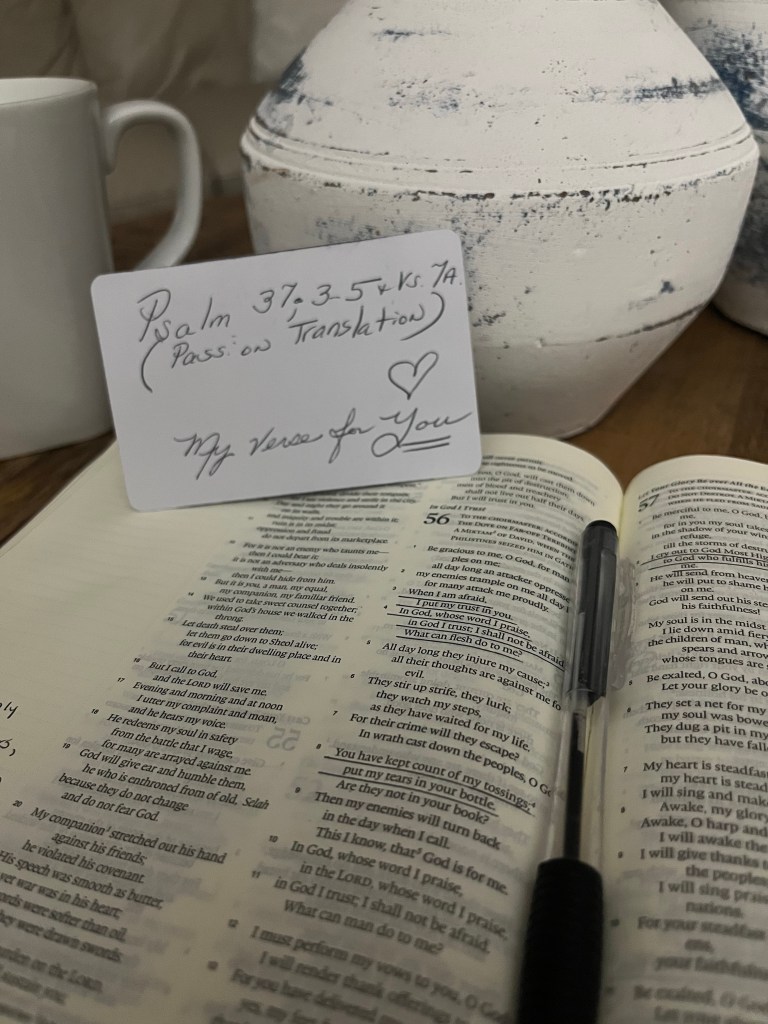
Texting someone takes about thirty seconds and can change the course of their entire day. You don’t even need to write a hand written note like the one I keep in my Bible. 🙃

3. Use your couch.

Your couch is for more than TV. Mostly, your couch is for spending time with those you love. Not just immediate family, but friends and people you meet.

I remember meeting a family on the beach and inviting them into my home. Ten years later, they are still some of my very best friends. Through the years, we’ve done holidays, walks on the beach, talks in our homes, meals and coffee together. If I had given in to the thought of “It’s too weird to invite people into my home that I’ve just met”, I would have missed out on a LOT.

4. Join a church that has inner-city or homeless ministries going on.

A church body is for more than sitting in tidy rows singing and listening to theology. Your building is not the church—YOU are the church!!

Go downtown and have Bible studies with kids in low income housing, chat with the moms, join in on homeless ministries. When you do join in, do more than ladle food onto plates; actually sit and talk, relaxed and comfortable, with fellow humans who need to be treated with dignity and respect. Remember to love, speak, and join rather than distance yourself and preach. Preaching is good in it’s time and place, but always be mindful that those in need are consciously aware of their need, and want to feel like you are sitting with them more than preaching at them. In that space, God will fill you with words, prayers, and tangible love.

Our homeless ministry taught me a lot. As a woman, I thought I’d feel uneasy around homeless men but each Friday night I am so full of peace and I genuinely enjoy interacting with people I would otherwise pass by at stoplights on a busy work day.

Remember that every man or woman on the streets is some mother’s son or daughter. And when a mother can’t help her grown child, perhaps Jesus wants you to help him.

There are few prayers so deep as that of a mother asking God to rescue her child from the streets. The beds we make, food we serve, and talks we share over dinner have little to do with chicken and blankets, but everything to do with love, community, and sowing seeds of hope.

I can sow hope into the man who wants to help me carry out trash when I’m struggling not to drop an over sized load. I can walk with him, talk with him, and let him feel like a genuine help, because he was. I want him to remember what it feels like to help and feel good about himself. This is done by one simple act of accepting his help and treating him as I would any other man.

We are not saviors—we are servants pointing a better way toward a Savior.

5. Invite people into your home.

It’s okay if the bathrooms didn’t get cleaned and the food is simple. Live with an open door policy where neighbors feel comfortable knocking on your door for that one ingredient they don’t have and don’t want to run to the grocery store for. Start by asking your neighbor for something when you need it so she knows she can do the same.

Invite your friend over for a walk in your neighborhood or a talk on your porch. Purposefully create spaces for hospitality, and purposefully invite people into those spaces.

6. Stop at Church.

It’s easy to say “I don’t like small talk”, and quickly run out the door after church. How about changing that by scanning the room and noticing a new, uncomfortable person who needs to feel welcome?

People often choose to return to churches based on how welcome and included they feel. One of my very best friends is one whom I reached out to when I noticed she was new. She told me later, “I came back partly because of you.” To this day, even though we now live on opposite coasts, we feel like blood sisters and love each other deeply. For years, she has been one of the best gifts of my life.

Jesus stopped to speak to the woman at the well, and it led to an entire town hearing the gospel. (John 4:1-42)

Paul and his helpers stopped to speak to the women at the river, and it led to Lydia’s entire household being saved. Later, she begged them to enter her home if they thought her worthy. Lydia knew that hosting was an honor. (Acts 16:13-15)

Paul tells Timothy to treat the younger women as sisters and the older women as mothers. He didn’t say ignore them or by-pass them. Timothy was to be a brother to girls his age and a son to mothers in the church.

Jesus loves people. He is passionate to reach those He created in His image, and He wants to use you and I to do His work. What does He have lined up for someone that may not happen unless we open our eyes?

For the cause of love,

Sara

A Call to Community

I watched a young mama shiver in the cold and wind, and as I went to give her a hug, these words reached my ear, “I don’t have a coat.”

She was smiling and beautiful, surrounded with her children and wanting to stay for the Christmas party our church was throwing for the community kids.

We’d spent a lot of time wrapping gifts and setting things up for fun, food, and even some preaching. The kids were aglow and everyone heard about Jesus, got their tummies filled, and lined up for a wrapped gift at the tables.

The kids who had attended weekly Bible lessons under the tree got their own special, labeled bags of gifts for their families. And here I was, a mama myself with my own child running around with the rest.

I wore my favorite parka, one my own mother bought me, one that wrapped me up snug and warm each winter with thoughts of her. It fell just above the knees and hugged me close on cold, wintry days, a little like she did.

I watched the young mama shiver in the cold, determined to stay for her children. Then, I knew what I needed to do. I walked over to her and wrapped my parka around her. “Stay warm”, I whispered.

The smile on her face was lit up with gratitude. I walked away to two friends who both offered to give me one of their jackets. I accepted, and before long had layers to ward off the cold.

Community becomes a circle of love when we allow it. I could have refused the help for myself but as I watched a friend walk to his car to find an extra something for me to wear, I knew this one thing—we’re all supposed to give, receive, and be part of a circle larger than ourselves, no matter where we are.

What if America returned to community, where we invite each other into our homes and extend our tables regardless of status, wealth, or even if the bathrooms are clean enough for guests?

What if Christians went into their communities to serve on soccer fields, town events, and anything else that would help them connect with people? What if we had TIME?

Even things like coaching soccer turns into more than a sport; it is an avenue into children’s hearts and a way to connect with parents on the field. What better way to connect with parents than to love and help their child?

Every child might not love Bible lessons under the tree each Saturday of the year, but every child loves Christmas—and when the same people show up for both, eternal impact can be made.

We are to be in the world but not of the world.

Often, we live as though we are not in the world at all. We build our own Christian empires of Godly homes and safe, theologically sound churches. As long as we keep the world at bay, we feel “Godly” and are convinced that our children will grow up to be the same.

But what if we’ve turned out to be focused more on feeling good about our methods than being in touch with the goodness of our Master?

I’m inviting all my sisters in Christ to join me in a quest for ways to love on our communities. Not as saviors or mini redeemers, but as fellow humans wanting to love all with the love of Jesus Christ, invite all into a place of belonging in Christ, and lengthening our dinner tables as we celebrate and give to others as He gave to us when He entered this world to live with us so He could die for us.

Does it settle into our souls that HE CAME?

Jesus Christ ate with us, spoke with us, and became human when He was fully God.

He walked and lived here when He could have stayed in perfection.

He carried our sins so we wouldn’t have to.

Perhaps the ache in our souls for more is because we were created for more. And as women, we don’t need to wait for our churches or husbands to carry out all we’re longing for. We were born to nurture, create spaces for love, and invite others into them. Here is where the power of Godly femininity comes into play—imagine the impact women could have on their communities if we all did one thing for others that made us uncomfortable?

I can walk past the new mama on her doorstep of that same community, or I can pause, say hi and comment on her baby. I can get her number and ask if I can visit her and her baby.

It took me awhile to get back to her and when I did, this is what she said, “I thought maybe you forgot about us.”

My heart ached a little. Here, I almost didn’t stop to take her number. I almost forgot about her because I didn’t know if she’d want to be remembered. Yet, months later, she remembered a complete stranger and wanted to know I had not forgotten about her.

I entered her apartments days later and sat with her in her own space, holding her baby and chatting about life. The gift beside me wasn’t about the gift but about love—because when you gift a mama’s child, you gift HER in ways she can feel.

How can we walk toward others this Christmas season and into the New Year? How can we live new, reborn, remade—where our minds are set on others and we intentionally walk toward them in ways that make us uncomfortable?

About three hours later on that cold, windy Saturday, the young mama walked toward me. “Did you give me this coat?”

I hesitated and thought of my mother and our shopping day where she’d made sure I had what I needed to stay warm. Then, I looked at my new friend’s young face and her bright eyes surrounded with the same warm fur that had kept my own face warm.

I nodded and wrapped her up in a big hug. “Yes, I gave it to you.”

I spent the following week listening to podcasts (familychurchnetwork.com) on how to show our neighbors the love of Christ. Friends, it looks like so much more than attending church or even inviting others to join you there.

We must be WITH the people Christ came for if we are to show love TO the people Christ died for.

Lengthen your tables, meet your neighbors, show up to volunteer in your communities—and through it all, watch for spirit led ways to bring Jesus.

“For our sakes, He became poor so that we might become rich.” (2 Corinthians 8:9) As Pastor Faw says, “His birth was for His death, and His death was for our LIFE.”

JOY to the world, for He has come!

Love Always,

Sara