Author, speaker, and mother of four beautiful kids. Passionate about wholeness, healing, purpose, and identity for all women regardless of culture, background, or circumstance.
The dear girl sits at my kitchen table, and her lower lip trembles.
She’s letting it all out, this frustration of performance for many years in order to gain or keep approval and love—and how it didn’t work, and she got less than she deserved.
The tears won’t stop, and they pour hot and long. And I say it as firmly to her as I’ve said it to myself, “You are not loved because you dress well, accomplish a lot, or because you love your kids. You can just be who you are—and be valued, treasured, and worth a lot.”
She sits, silent, absorbing the words. For someone who’s worked her entire life—worked for God, parents, husband, and kids—with little thought or focus on her own ease—these words are a gold mine.
She’s not a selfish person; she’s a giver. And she needs to hear it—her worth is not based on what she does or how little mistakes she can make.
Mothers, when you raise your kids with criticism for each little failure you have a recipe for a hard working performer who may crash after many years of striving.
Raise your children in an atmosphere of emotional safety andunconditional love.
Our value is based on the Son of God and His thoughts of us. It is based on the fact that we were created in His image and He wanted us. Hear this—you can work your entire life to gain approval without ever knowing how much you were approved before you ever did a thing.
Outward actions do matter, but they must be a fruit of the heart being in an approved place with God rather than the striving of a heart trying to get to an approved place with God and man.
At birth, when you laid on your mama’s tummy with wet, sticky skin, do you think you were less loved and approved of? You had done nothing, but taken a lot—and you were loved and adored as much as you will probably ever be. You were sticky, icky, squalling, and couldn’t even smile.
How then, soul, do you think that, many years later, you have to perform for love? That you need to prove yourself needless and perfect? That you crash when others see faults in you?
You were a human being long before you were a human doer.
When we know how much we’re already loved by God, we enter rest. In this rest, we show love best to those around us. We want to shed the sweat pants, get up, and serve others. We truly desire to give, and give well. We sacrifice.
All of it becomes a circle of love rather than a striving for love. Circles go round and round with no end of exhaustion, because you receive love as you give out love.
If your lips are trembling today, remember who you were when you were born, and how much you were loved and adored by God—and most likely, by everyone in the room who laid eyes on your wet, sticky, helpless little body.
You are the same human being today, and have the same value today. Jesus Christ died for YOU.
Remember to be in a state of love before you try to give out love. If we can learn this ourselves and teach it to our children, we will have accomplished much.
I had asked the question a million times, “What is forgiveness?”
Then, I’d asked another question, “Is it okay to be angry?”
My circumstances forced me out of the usual “don’t ever be angry” stance I tried to live by. Suddenly, life was so raw that I took a good look at Jesus’ feelings when He tipped over money tables and ordered the vendors out of His temple. (Matthew 21:12-13)
I pondered the fact that Jesus called mercy and truth to meet up, and righteousness and peace to unite. He wasn’t asking for mercy and peace only, but wanted it to unite with equal doses of righteousness and truth.
Seeing God’s mercy as it really is allows for nothing else. God is not only mercy; He is also truth. In fact, truth is merciful and mercy is truthful. In Christ, they cannot be separated.
God’s incredible mercy doesn’t blithely pass over murder, rape, abuse, or any other wrong we see in this world. And in all honesty, those who say “don’t judge” the most are often those who ask for judgement most when an offense happens to them.
God’s love doesn’t accept all things; it changes all things.
There are certain things love just doesn’t do. Those who are full of true love speak out against things that don’t line up with love.
The mantra “don’t judge and accept everyone” is very quickly used by quilty parties to project their own quilt onto those who dare speak up against wrong. This is such a far cry from what Jesus meant when He asked us not to judge each other that there is no comparison between the two.
Divine Love cannot “accept and not judge” things that hurt and harm the people He loved and died for. Love can only accept things that line up to the heart of God.
God is love and He gets to interpret the meaning of it.
I’ll never forget the day I was driving in my car while my little boy asked a million questions on life and God, when it suddenly all came together in my heart.
Forgiveness meant seeing God’s heart for the offender. In my situation, it also meant not being in denial, but saying yes when two sets ofinvestigators asked to talk.
Then, it meant releasing the offender into the hands of God and those in charge while I walked free, having given it over after doing my part.
I’d met plenty of women who interpreted forgiveness as denial. After many years of pushing things to some back corner of their mind, they were still crying and trying to “forgive”.
I’d also met women who couldn’t stop talking about what happened to them and seemed bent on bringing justice while the offense was strewn around like some candy dangling in everyone’s eyes.
I wanted neither. How could mercy and truth meet up like Jesus talked about?
Sisters, the truth sets us free. The truth of everything, all the time, in all situations leads us to God’s solution for everything, all the time, in all circumstances.
Embracing the truth of hard things allows us to move from the hard into better things.
How can you find internal release from something you haven’t owned up to or dealt with? Denial cages your soul while truth brings you to freedom. Trust me, I know.
God’s remedy for women is never silent, voiceless suffering. It is always truth, help, and solutions.
My soul found an incredible release from my situation as I placed the outcome of all things into the hand of a God who cared for me and my children more than I can comprehend. I watched Him move, and hear me carefully on this—because I had done my part, I was able to let it go in complete trust.
When our soul finds absolute rest in the outcome of our circumstance, we know forgiveness has found its place.
Forgiveness is not denial; it is rest.
Forgiveness doesn’t accept all things; it leads us to release all things.
Forgiveness doesn’t mean shutting up when you need to speak up; it does mean speaking with grace and truth regardless of your circumstance.
In short, forgiveness is internally breaking free from your situation after you’ve walked through it, honestly dealt with it, then have put it behind you and moved on to better things.
Rather than become bitter, you become better.
You can think of the circumstance without being taken over by it. You can release both the offender and the offense to God while you reach out to good people, good things, and trust God to meet your needs as you put Him first in your life.
You are defined not by what happened to you, but by what you make of it.
Whatever you don’t let go of still holds you captive. But, whatever thing someone meant to hurt you with is undone when you release it and learn from it, instead. As Corrie Ten Boom says, “There is no pit so deep where God’s love isn’t deeper.
Forgiveness is a gift to yourself and an act of worship to God.
It’s morning, and the day begins quietly except for the knock, knock, knock on my office door.
I’ve been hiding in here with a cup of coffee, my Bible, and Jesus. Because life is so full of late that I’ve been leaving little margins on my paper while I clutter the entire page of each day with scribbles those around me can’t read clearly.
This morning, the knock is persistent.
“Yes, son?”
“I’m so hungry. Can I make some breakfast?”
He’s too young to cook so I ask him to wait, but give him a snack. And I get lost in my musings the next second.
Knock, knock, knock—again.
“May I have peanut butter on my apple?”
The day is off. Already my mind is swarming with what needs to be done and what will happen whether or not anything gets done. I will load the car with kids and take them swimming, then return in time to host a houseful of guests. This morning I choose between laundry, cooking, and cleaning—perhaps all three?
The kids will have a list with chores to accomplish before the fun begins, and I will be buzzing about like some bee that’s just been mortally wounded, trying to get the house ready and food prepared.
And then, it will hit me. I did this yesterday, and the day before, and the day before that. I did this last year, and the year before, and the year before that.
The floor never stays clean, and the garage fills with more recycle garbage in a few weeks. No one really knows how hard I worked and no one really cares that I kept the yard spotless.
What they remember, and what I will remember in years to come, are things of the heart. I’ll say, “Remember the year we learned to spend more time together?” Or, “Remember the year we all learned to apologize?”
“Remember the summer we sat in the living room talking about life, the importance of a relationship with Jesus, and how to have one?”
Mothers and wives, the rush of today will never fill our quest for the meaning of tomorrow.
The moments we give to God help bring us to the eternity we get to spend with God.
Moments with God don’t have to be alone, quiet, with stevia sweetened coffee and a Bible. Moments with God can be all moments in the day.
Because when God is first, the page of your day won’t merely be filled with pursuits for present gratification. When you walk with God, you are quick to deny your small desires for a greater good. You look ahead, and you look behind, and you determine how today will make your goals for tomorrow become reality.
When you’re sitting in that chair with a greying head, pondering life and how you lived it, you won’t be sorry you paused the rush to grab a Bible and show your kids the way.
You’ll be truly glad you stewarded the gifts God gave you, rather than rushed through life ignoring His hand pressing your heart to be, do, and dare.
When you hear of your kids’ grown-up lives, you’ll be glad you took time for them—because now, you would love them to take time for you.
And as you sit, with the presence of Christ satisfying even your later years, you’ll be so glad you allowed Him to remove the clutter from your page, align the words correctly, and leave a clear margin at the side.
Let little boys knock on your door repeatedly for peanut butter, and let your brain begin to swirl with a hundred demands on your day. Then, take a deep breath and remember the most important things you will remember in the years ahead.
Give your moments to eternity, for in a short time, eternity will have overtaken even the comprehension of this moment in time.
Live well, for in a short blip, when time as it is, ends, you will know the meaning of being fully alive. Jesus wants that life to permeate us now and only to continue, then.
Let eternity begin in your heart today—then, bring eternity to the hearts of all those around you.
“There’s a lot I need to do today, but I’m still in bed,” I responded truthfully even though I knew she was already headed out the door for a long day’s work.
My mom can know everything about me and think nothing less of me, for some odd reason. She’s one of my best friends and I guess we both love and like each other.
Covid-19 is still on the rise while the morale of many is on the low. I’ve written pages of inspiration, sorted my little boy’s legos, almost completely caught up on paper work, and gotten my children started with on-line school. I’m working out with my girls for the first time in awhile………….Next?
You can only laugh for so long over quarantine comedy until you feel like you may need a quarantine dirge. I’ve laughed so hard for so long over one single video that my daughter looked at me yesterday and said, “Mom, you need a social life again.”
It’s Monday morning—and nothing has changed. What’s more, rain is pouring down on the roof while the sun has disappeared along with all semblance of normalcy.
I’m not sure what normal is anymore. For the last two years, my life has twisted, turned, tipped, and tobbled over in the most hell-ish fashion and it’s taken every ounce of heavenly grace to make it through to the other side.
My daughter looks at me. “Mom, it’s so weird that coronvirus hit right when so many other things in our lives are happening.”
I agree. It’s so, so weird. How much more could possibly happen in two years?
I decide to make the most of today by lighting candles, baking a french toast casserole for breakfast, and turning on my favorite worship music while I kneel in front of the screen with my Bible.
My daughter joins me and I stroke her head while the words continue over, over, and over.
“By Your Spirit I will rise from the ashes of defeat.
The resurrected King is resurrecting me.
In your name I come alive to declare your victory;
The resurrected King is resurrecting me.” (Elevation)
Truth be told, God is as good today as he was yesterday. I stare at mountains rolling by on the screen and realize this: God is every bit as much with me here as he was when I’d hike upward five miles and spend hours gazing at immovable majesty.
Or when I slept at the top and woke to a shimmering lake nestled in those snowy peaks. Crazy, wild beauty.
Mountains are steady.
They’re always there.
They carry strength incomprehensible to our small human beings.
I love mountains and haven’t found them close enough to my new home to get to, yet. But God is as real, strong, and steady in my housing development as He is on the mountain side.
I just need to tap into HIM.
Sometimes we look for external indicators of internal reality, when God is saying “I am always here.”
It doesn’t take mountains, people, or things to create the love of God. Love always is, no matter what, because God always IS.
We don’t really create love, joy, peace—God has already created it and we merely maintain it or disrupt it. God is a steady, never ending, faithful presence—always available, always there, always full of grace and truth.
We look for outward expressions of love when there’s an eternal Lover of our souls Who far exceeds any human love we could have. For heaven’s sake, we even seek love in the form of media ‘likes’.
A thousand people hitting ‘like’ on your Instagram page can’t compare to one God scribing eternal LOVE all over your life, every day, no matter what.
During this time He says to you, to me: “Behold, I have graven you on the palms of my hands; your walls are continually before me.” (Isaiah 49:16, ESV)
He also says in 2 Chronicles 16:9 “For the eyes of the Lord run to and fro throughout the whole earth, to give strong support to those whose heart is blameless toward him.” (ESV)
You may be rushing to work this morning—or, like me, savoring this time when you can slowly drink coffee and listen to worship music with your child. Either way, no matter what, remember that Jesus Christ is unchanging—and He’s watching out for you with strong support and love deeper than you love your own children.
I walked into her small warehouse and looked over the shelves.
Impressed with this young mom who ran her own business besides running a house smoothly, I studied the bottles to see what was inside. All of it was for healing purposes.
It’s awesome to run into a business that sells only healing products when many stores are loaded with cigarettes, preservatives, and sugar.
“Here,” she says, “Take these to your sister.” She pulls open a small drawer and empties the contents into a bag.
I look at the label. “Healing Salve,” it says.
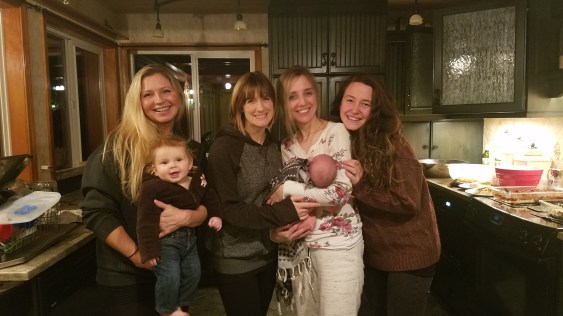
A few of the best people in my life!
My sister smiles. “She says she will never change the recipe because God gave it to her.”
I’m throwing a few of those freebies into my own suitcase. I’ll rub them onto aching muscles and pray love and healing into aching hearts.
Truth is, I’ve been praying a lot on what to do or say (or not do or say) in a certain circumstance. I’ve asked counsel, and some of it varies. Always, I come back to the realization that God’s peace is powerful and only He can lead me right.
A book may give advice, but it is cut for your particular circumstance?
A friend may speak into your life, but does she know all the ins and outs—and if she did, would she still say what she says?
A verse may speak to you—but is your application of it God’s heart for you?
Wounded sister, struggling to fight your battle and win—listen hard to the Lord. He may direct you to do what is crazy. Or, he may ask you to try something you’ve never done before.
Walk closely to Jesus. He breathes life into the impossible and speaks promise to lies.
Choose where to give your energy!
He knows each heart and knows where each difficulty began—sometimes, long before symptoms rose.
He goes deep. He goes carefully. He goes lovingly.
He offers a hand, but you need to hold it.
He promises wisdom, but you need to receive it and apply it.
If you do, you can rest. No matter how difficult or grueling the climb, God walks beside you and holds your hand, promising to never, ever leave you alone.
His recipe mixes all ingredients of your life into one powerful, healing salve. And if you allow him, he will show you what to mix up for those around you.
Make your family most important!
Because all God’s daughters are called to bring life, healing, grace, and blessing. This is what your Father does, and this is what He gives you to pass along. In the areas where you see you haven’t done so, simply turn your heart and receive his grace all over again.
He won’t change his recipe for healing salve. Apply it gratefully.
The little lady looked at me eagerly. “I can sleep on the floor,” she said.
My brain did one of those twisty-turvy-upside down spins that happen when you’re moving out but need to get renters in your house.
I looked at her, and I said yes.
Sure, she could sleep in the empty Air bnb living room even though the bedroom was already occupied by another renter and I hadn’t expected her for several more days when the other renter would be upstairs, and I was gone.
I was paying a huge mortgage and moving four children across the country. The bills would roll in and I needed to get renters into the house. As I talked to the Lord, He brought one after another—people who needed a short term place to call home. People I could trust.
My head spun with a million things to do, things to sell, things to sort, and things to pack. Renters to bring in and a house to rent all the way on the east coast. Jobs to work as long as possible. An ex-husband I couldn’t bring myself to say good bye to, and a life being folded up like a towel, stuffed into a box, and taped shut forever.
One of the renters ended up being a true christian with the gift of prophecy and encouragement. Another was a writer who just needed a simple room to focus on her project. And yet another was a couple who was eager and willing to tend the fire and care for things around the place.
The garbage pile in the garage grew to astronomical heights as the other side of the garage filled with a renter’s boxes and the art studio next to that filled with another renter’s stuff. My own stash filled the center of the garage, and the shop held the moving sale.
That was the day, when I sold things I couldn’t move and had friends fill in for my lack of marketing skills until my ears burned. They did the job better than I ever could have.
I’d stand in the middle of the mess, wondering why under heaven I had this strange sense of peace. Why was I in a bubble of protection where nothing could harm me, where nothing could stop me, where nothing could touch me?
It was as crazy as it sounds. My phone kept pinging every few seconds with someone asking about one more thing they wanted to purchase, while my ex husband texted me a list of things he wanted and talked about the dog which was ironically being dog-sat by a dear family who desperately wanted to keep her.
I was relieved to have her away as she barked a lot and I kept cringing at my own voice trying to shush the poor pooch right up.
The dog was finally gone when my daughter said those dreaded words, “Mom, can you please check my head. I’m itchy.”
How under heaven do you pack up a 3400 square foot home, sort and sell, prep for renters, find a new house to rent thousands of miles away, cancel your clients, transfer schools, and treat for lice??
I lifted her hair and sure enough, there it was. That sticky little white speck I’d recognize anywhere, followed by a trip to Walmart for another hundred dollars worth of chemicals and essential oils. Then, the laundry going non-stop for the next few days.
My brother flew in to help drive the truck across the country, and I met him in my kitchen, fell into his arms, and sobbed out loud. He cried with me and we both stood in the kitchen together, broken up over my broken up home.
Divorce and betrayal must be from the hottest places of hell. And when it comes to moving, people rate it as one of the top most difficult stressers. But for me, it really wasn’t.
We groaned over lice and moaned over boxes, but I told my lovely children that none of us were dying, none of us had cancer, and lice was a small thing we could wipe right out of our home.
I knew what it was like to really hurt, to sit in a court room with the man I loved and married because he filed for divorce and was with a sixteen year old girl twenty two years younger than me.
The only thing good about going through enormous amounts of pain is that it sets lesser things into proper perspective.
See this, friends—most of us gripe over such small things that we’re held absolutely captive to the smallest world when God would set our hearts free to breathe, live, dance, and smile.
I stood in the mess and wondered this again: why did I have such peace?
Hadn’t Jesus said it, and yet, I was still amazed by it? “Do not be anxious about anything, but in everything by prayer and supplication with thanksgiving let your requests be made known to God. And the peace of God, which surpasses all understanding, will guard your hearts and your minds in Christ Jesus.” (Philippians 4:6&7, ESV)
The day to fly away came quickly, and my brothers sent me out the door before the truck was loaded. I gathered my children as I heard them say, “You don’t need to thank us. This is what we do.”
The children were tired and so was I. But Jesus surrounded us on that plane and covered us as we sat in Vegas for four hours watching hot singles fly in just for fun.
Jesus covered me when I sat beside the young wife who was flying to Vegas to join her husband for the weekend, and I was flying to North Carolina to start life over because my husband was with another girl.
We were both blonde, both loved books and refused to purchase kindles because we were stuck on real paper. Both of us loved romance and relationship. She had it, I did not. Her i-phone displayed her handsome hunk while mine had been wiped clean of each photo.
But we both smiled at each other and felt that sisterhood of connection and warm wishes. Life isn’t always fair, but God’s love covers all of us equally.
Do we see this, friends, this awesome truth that even though tears roll and things happen and we struggle to find air to breathe at times—that if we hang on and do the next best thing in sheer faith, He comes in to cover us?
I’m certain of this one thing, I’m not the only girl on this planet who has gone through emotional trauma, who has wanted to change the outcome of life, who has cried up to the heavens at night asking God why.
I’m also not the only girl who has found Jesus standing right next to her with unexplainable, yet undeniable peace.
I’m here to invite you to join me as we all learn to be loved by such an awesome God.
I landed in Charlotte with weary children at 1:30 am to a whole new world feeling like vast amounts of silent space that had never been traveled. We fell into bed and I didn’t get dressed the entire day as my body and emotions tried to catch up.
The rock I had brought from home sat in my suitcase and reminded me again. “The Lord is my Rock.” (Psalm 18:2, ESV)
For then, that was enough. For always, that will be enough. And everything under the blessing of God will be good, and will be enough.
He covers me, and He covers you.
P.S. Two weeks later, we are cozily settled into a sweet little home, and life in North Carolina is just beginning to ROCK. I hug my children daily with deep amounts of gratitude. They are brave and beautiful, all four of them.
Big brother slunk back into his seat. “But I was right, and Mom didn’t answer right away.”
He was upset, and so was she. She felt imposed upon and he felt unheard and disrespected.
I could turn around and scold him for answering when she had directed her question toward me. I’d done that before. But, I figured out there was another way.
Why not ask my daughter to hear her brother out? It’s a good thing for all children to learn, early in life, not to shut another down when he or she speaks.
My daughter didn’t know that her brother needed to be heard and feel valued. That he had in inborn desire to solve problems and feel wise. That when he offers his voice kindly, it speaks to his manhood when he’s heard.
She had no idea, but it’s up to us mothers to teach our daughters what they don’t know. When we scold our son for withdrawing after not being heard, we are trying to fix their reaction while failing to see the trigger behind the reaction.
We can spend a life time scolding people, but we’ll gain less ground than when hear them out.
When the daughter snaps at the son for answering, we should turn to her gently and remind her to hear people out, then request an additional answer from her mother. Perhaps she can apologize for snapping at her brother as well.
Mothers often look for ways to love on their sons, while missing many, many opportunities to show respect. But, many young males read love when they feel respect. It’s as vital as the air they breathe.
I want us moms not to parent in vain. Mothering is exhausting enough without having our best (and often naive) efforts unrewarded.
My youngest boy is great at problem solving. He has a detailed, nerdy brain, and I do not. Though he’s only eight years old, there are times when he fixes something for me. I use those times to thank him, tell him how great he is at fixing things, how intelligent his brain is, and how he could probably be a doctor when he grows up.
My little boy loves being hugged and loved on, but I can tell this speaks to an entirely different part of his brain.
This week I’ll be looking for opportunities to ask my oldest son for input. Perhaps he can research how to do something I need done, or help me choose a gift for a younger boy.
Daily, we can do things that last eternally. We just need to learn how.
And as for the daughter, she’s a whole other topic for discussion. But just briefly, she also needs to be heard. When she snaps at her brother for answering her question, she can be taught to hear him out, then request an additional answer from her mother. She could also ask her brother to wait to share his opinion until she’s received an answer from her mother.
Mothering is a constant dance between the masculine and feminine. But then, so is all of life. Welcome to the beauty!
People asked me all the time, “Are you still writing?” and I looked at them with the answer, “Yes, but most of it’s tucked away because at least for now, it’s rather private.”
“Rather private” was the way I felt more and more. It was unusual for me to crave a small group of people on a Sunday morning over the usual large crowd, but some weeks found me in a small home church soaking up the solitude rather than my own church where I could worship extravagantly with a few hundred people.
I needed the quiet. My head knew it was okay, but my heart had a hard time catching up, because I knew I was called to something.
That call to something had led me to publish a few books and begin public speaking engagements. I thrived in it and my soul came alive because I was living out my calling. Then, a major crisis hit my life and I needed every moment to gather strength and wisdom just to get through.
That place was just as okay with God as the active places had been. Truth is, I was still active—but in other ways. Every day was spent earning money and taking care of my children. Days off were spent resting or rejuvenating.
I learned to re-live what I had done for many years—be faithful in the moment, with no agenda other than loving God and others.
Because my children were home that day, I didn’t even go to our annual writer’s conference. Last year, I taught a workshop in it. This year, I resigned from the leadership team of it.
I had no extra energy to give, and they understood. But, was I okay with the quiet season?
I had always worked hard. Pushing myself was a life-style, a habit. I wanted to feel good about what the day accomplished. Then I had to learn to be okay in the stillness, because God was there, too, and He didn’t call me to make noise when He knew I needed the quiet.
Oh friends. We can gather satisfaction by living out our calling, but refuse to gain rest when God is calling us to stillness.
Every few weeks, I hiked mountains in silence, pondering life. Friends joined me who were okay with my season, and often, people messaged to share their own stories with me. The calling I had always known I had, continued.
Was I as okay walking women through their tragedies from a place of tears as I was from a place of accomplishment? Truth is, people need love more than they need to see accomplishment—and they just may feel safer walking a valley with you than feeling pulled to a mountain top by you.
I’m here to embrace each of my seasons and I’m sharing them with you so courage rises in your heart to do the same. I look back on my short life and realize this one thing—all good things rise out of faithfulness in small, every day matters.
My books came out of embracing the urge to write. I was a mother of four small children, had no office, and no private space. Just a laptop (from a yard sale) and a heart saying yes to Jesus Christ. Just a few hands picking up my phone to jot notes down quickly when I couldn’t write immediately and there were words tumbling around my brain as I did the mom life.
The inspiration hit because I said yes to Jesus and listened in when He spoke. There was nothing big about it. Just many small acts of faithfulness for many years, then a “yes” when God let me know I’d turn it into a book.
There was no striving to get somewhere or do something or be someone. Just a lifestyle of loving God and doing what He created me to be good at.
The new season is another one of saying yes to God. Yes, I’m still writing because that’s what writers do. No, it’s not as glamorous and there’s a whole lot of pain in a story like mine.
But in this quiet season, there is still that deep knowing that I’m loved by God, and I’m one of His favorites—as are each one of you, because God can divide His love, yet give each one of us ALL HIS LOVE.
Seasons change, but His love never will.
Embrace the quiet or the accomplishment because none of it matters as long as you’re embraced by CHRIST.
I shoved two more bags of “stuff” into the car with great satisfaction. There’s nothing as good as clearing the house of excess.
Minimalism is on an all time high. You get the look—crisp white walls with minimal décor and a few succulents gracing a shelf or two. Very different than the oldies look of stuff, stuff, and more stuff.
Just recently I turned old brown paneling into a crisp white wall—well, actually, a painter did–a super kind one who didn’t charge me a penny for his labor. I sold old furniture and purchased new décor. The results were remarkable.
Having less is great until we carry that over into kingdom living. In God’s kingdom, there is lavish excess and he wants us to tap into it, daily. But, it’s so easy to be frugal with our dedication to God.
Loving Jesus means abundance and passion, excess comfort in all circumstances, and care for every detail of our lives. And such a good God deserves maximum focus.
Americans often give Jesus just enough attention to “get into heaven”. But loving Jesus isn’t about getting to a place; it’s about knowing a person.
When all you want to do is get to heaven, you’ll treat Jesus Christ like one of those lovely succulents on the shelf of your home, there to grace your atmosphere with His presence and make your life beautiful. But you won’t breathe deeply of the very essence of Christ as you go about your day and your heart won’t really vibe with the good news of being born again.
Words like “born again” will sound like foreign language. Who says that, nowadays?
You’ll feel like Nicodemus when he asked Jesus, “How can a man be born when he is old? Can he enter a second time in his mother’s womb, and be born?” (John 3:4, ESV)
Or, you’ll feel like I did today as I sat a little wearily in a large crowd, but warmth and excitement overtook my heart as the pastor spoke about really knowing Jesus.
Knowing Jesus is different than knowing how to be good. I know what it’s like to be a good girl, but have no peace. That’s because Jesus isn’t interested in my goodness; He’s interested in me seeing that I need His redemption.
I remember the day I realized that no one can be good enough for God, and I had this vile sin nature within me that even my outwardly good life couldn’t answer for. I went to Jesus Christ for his free gift of mercy, and found that the best day of my life came at the end of my own resources. I found mercy only when I realized I desperately needed mercy.
But I didn’t stop trying to be good enough for God. I had always, always, always tried to gain the approval of people by being good. And, I figured God would kick me to hell if I wasn’t good all the time. My efforts exhausted my heart, and still I had little peace.
Then, Jesus showed me who he was. A beautiful, wonderful Savior who was more like a Father. An intimate Friend who was closer than a brother. A Lover who would love me unconditionally. Someone Who was always present, always available. Someone who wouldn’t rebuke me or point out my flaws unless it was met with equal mercy and forgiveness.
I fell in love with THAT PERSON, and there was nothing minimal about it.
I began to pray that God would maximize my love toward Him and all those He loves.
I want to be His hands, His feet, His heart in a world of brokenness and pain (of which I know much).
I learned to have fun and live fully. I learned to laugh even when I was crying—because the joy of the Lord was my strength, and He gave me richly all things to enjoy. I learned that the key to living a sanctified life was being deeply in love with a sanctified Savior.
You can’t be connected to Someone without becoming like that Someone.
This is why, when others talk of church buildings, religion, and denominations, my mind draws a blank and my heart doesn’t resonate. Religion is nothing to me, but Jesus is everything. And sometimes, like He did, I find more love and grace with non-religious people than I do with those who line the pews of a stained glass church.
When they tell me, “I don’t know if I’m a Christian, but I do believe in God”, my heart (and sometimes my mouth) says, “Please make sure you know the person of Jesus Christ.”
We can be minimalists with every THING, but not with every ONE.Jesus Christ is more than a sweet idea gracing our lives and making sure we get to a certain place; He’s a Person who wants to fill our lives and gift us with supernatural GRACE.
I still have that Edward Jones coffee cup in my house, that masculine looking one they gave me after catching those tears during lunch hour.
“What does forgiveness look like?” I asked the pastor and his wife. “Because right now, I don’t even know.”
I wanted to forgive. But I also needed to process, and sometimes the process of processing is long, hard, and ugly.
In times of crisis, one may go from grief, to anger, to despair, and all the way back to grief again. It doesn’t help when well-meaning people tell you to “let go and move on” and that you’ll have a better life in a short while.
You didn’t want another life; you wanted God to fix the one you already had, but instead it all fell to flames and the devastation was so great that you didn’t know how to breathe,walk, or move.
To the soul in crisis, grieving often feels okay, but difficult. It’s the anger part we don’t know what to do with. At least for people like me who were conditioned to believe that anger is sin, and avoided it at all costs.
For crying out loud, I’d repent in tears if I let the slightest bit of edge creep into my voice when I spoke to my children on a bad day. I hated tension of any sort and wanted everything gentle, kind, and peaceful. But when my life went up in smoke with all kinds of ugly, I knew it was unrealistic to feel “gentle” and “peaceful” about what went down.
I began a quest to be real with my feelings, real with God, and real with humanity.
I realized that Jesus tipped money tables over in righteous anger when the Jews brought their marketing into His temple.
I also realized God sent His Son to die for every sin on the planet. Not only that, one doesn’t need to work hard to receive forgiveness like this. It’s a gift, one none of us deserve, yet all get to receive.
Daily, I’m struck with the mercy of God and I’ve spent a life-time focusing on mercy. It appeals to my make-up and the way I want to live. But I’ve seen that one can only truly release and forgive if one grasps the fact that God is also a God of justice.
When I see that God holds justice in his hand and invites me to release all wrong to His control, I can truly forgive and release.
My God never said there was no vengeance; He said “vengeance is mine.” When I see that God holds both justice and mercy in a balance that I can’t even describe, I am able release the offender as well as the offense to a God who sees all and knows all.
God won’t just swoop down and force someone to change but get this, ladies who need intervention—He sees it all and knows exactly what to do when you don’t.
This sounds trite and we all think, “Of course He does, but that changes nothing for me right now.”
Broken soul, will you remember this with me: Your God knows when to render justice and when to give mercy. He’ll give you wisdom when to speak up and when to be silent. Sometimes His justice speaks out strongly; other times His mercy waits quietly. He will show you what to do when you wait on Him.
I cannot, hard as I may try, change my circumstance. But seeing God changes everything, and I invite every broken soul to join me on this journey to healing where I’m finding life in hidden places and springs in driest desserts.
I’ll never forget that lunch hour in the office of Edward Jones where my friend handles finances with such expertise. I’ll never forget how she and her husband caught my tears over cups of mid-day coffee.
Because sometimes all we need to know is that we don’t have to know when to feel what, because God knows exactly what to do all the time.”
Let it go, and learn to live fully in the very moment you breathe.

































 Women of Purpose